
Our Story
Provenance first. Proof second.
A private bourbon house in Louisville, built by collectors who were tired of paying secondary prices for bottles with no paperwork.
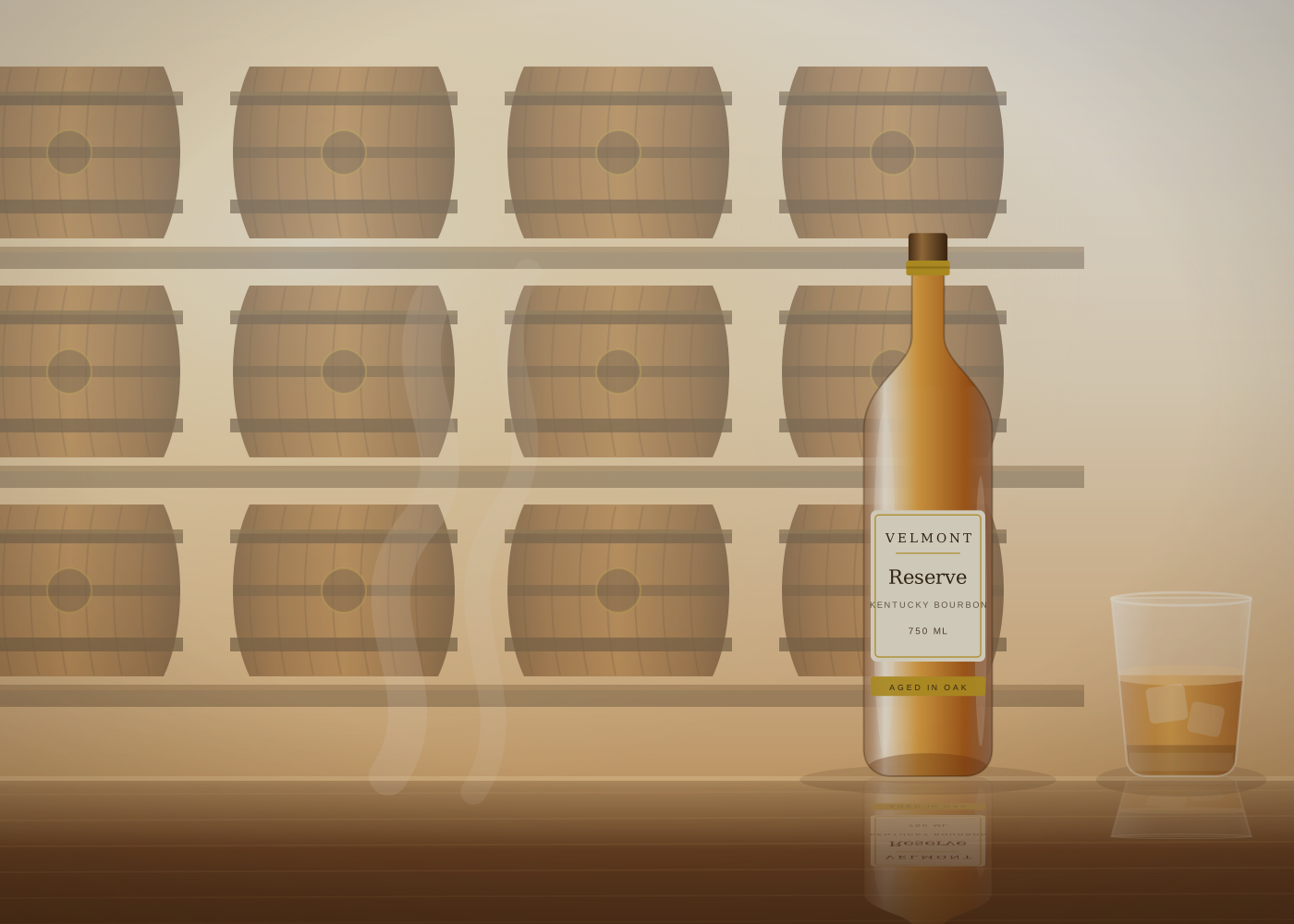
It started as an argument
Velmont began as a private cellar and a long-running disagreement about which barrels were actually worth keeping. Between us we had bought enough disappointing bottles at enough inflated prices to know exactly what was broken about buying rare whiskey online: no documentation, no accountability, and no one who could tell you which floor of the rickhouse a barrel came from.
So we built the opposite of that. A small house that buys through licensed channels only, records the barrel or batch behind every bottle, checks fill levels and closures by hand, and turns away anything it cannot stand behind. If a bottle would not go on our own shelf, it does not go on yours.
What we actually do
We are not a distillery and we do not pretend to be. We are buyers, and the work is unglamorous: tasting through barrel samples, reading warehouse records, arguing about whether a nine-year barrel has another year in it, and saying no far more often than yes.
- 2019House Founded
- 1,400Barrels Reviewed Yearly
- 6Curated Collections
- 100%Documented Provenance
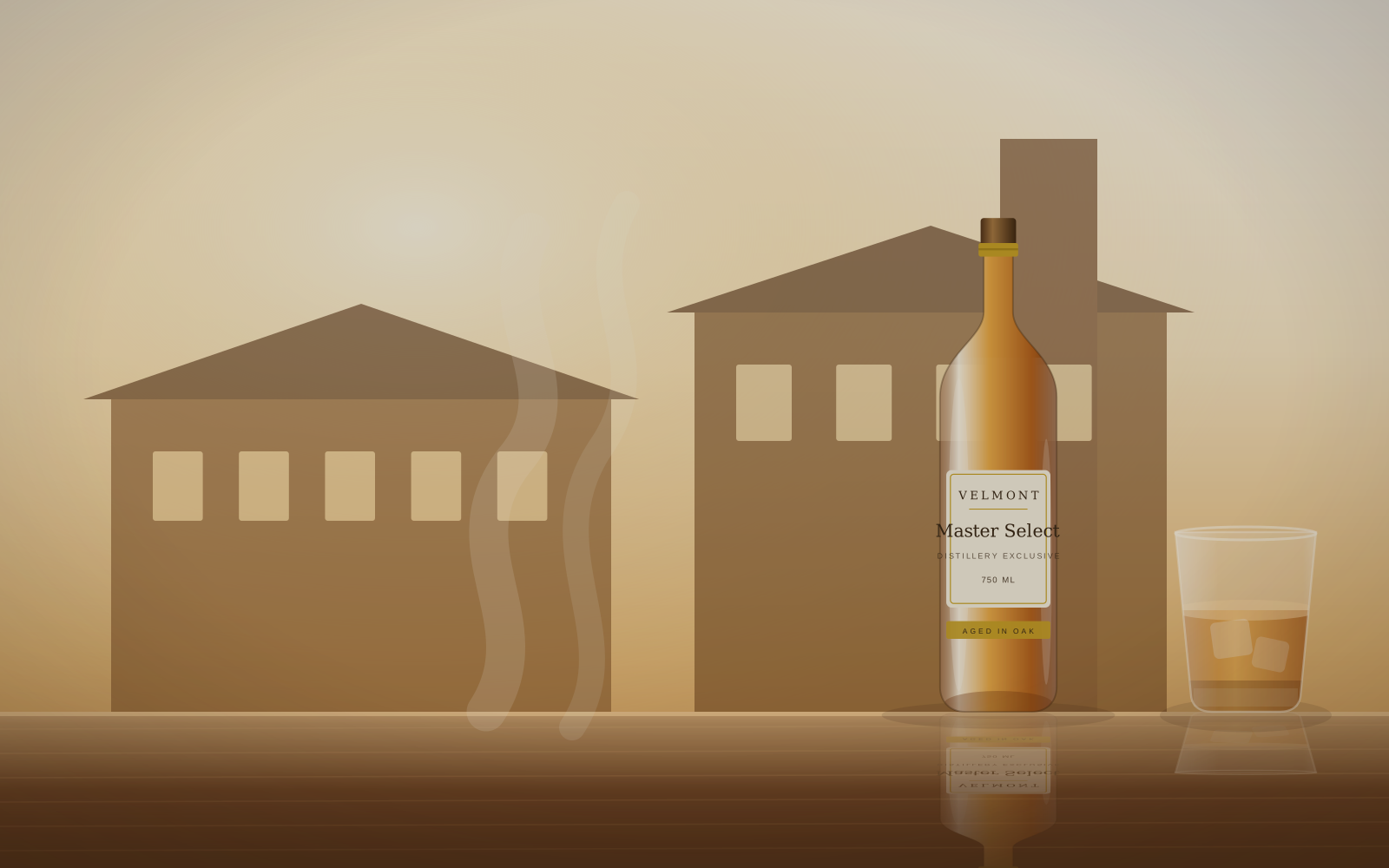
Our distillery partners
Our principal partner sits on a limestone shelf south of Louisville, where the water runs hard with calcium and free of iron. That accident of geology is the reason Kentucky became the centre of American whiskey, and it is still the reason the whiskey tastes the way it does.
Everything there is done the slow way: sour mash fermentation in cypress, distillation over a copper doubler, and maturation in rickhouses with no climate control. Seven floors of variation mean two barrels filled on the same morning can finish as entirely different whiskeys.
What we look for in a barrel
- Integrated oak rather than dominant oak — age without bitterness.
- A clean, sweet mid-palate that does not collapse when water is added.
- Length. A short finish is the fastest way for a barrel to lose our interest.
- Complete paperwork: fill date, floor, rick position and barrel number.
The House Rule
We only sell what we would open ourselves
It is a simple standard and it costs us sales regularly. We are comfortable with that.